タイム ツヤノール
Cỏ xạ hương
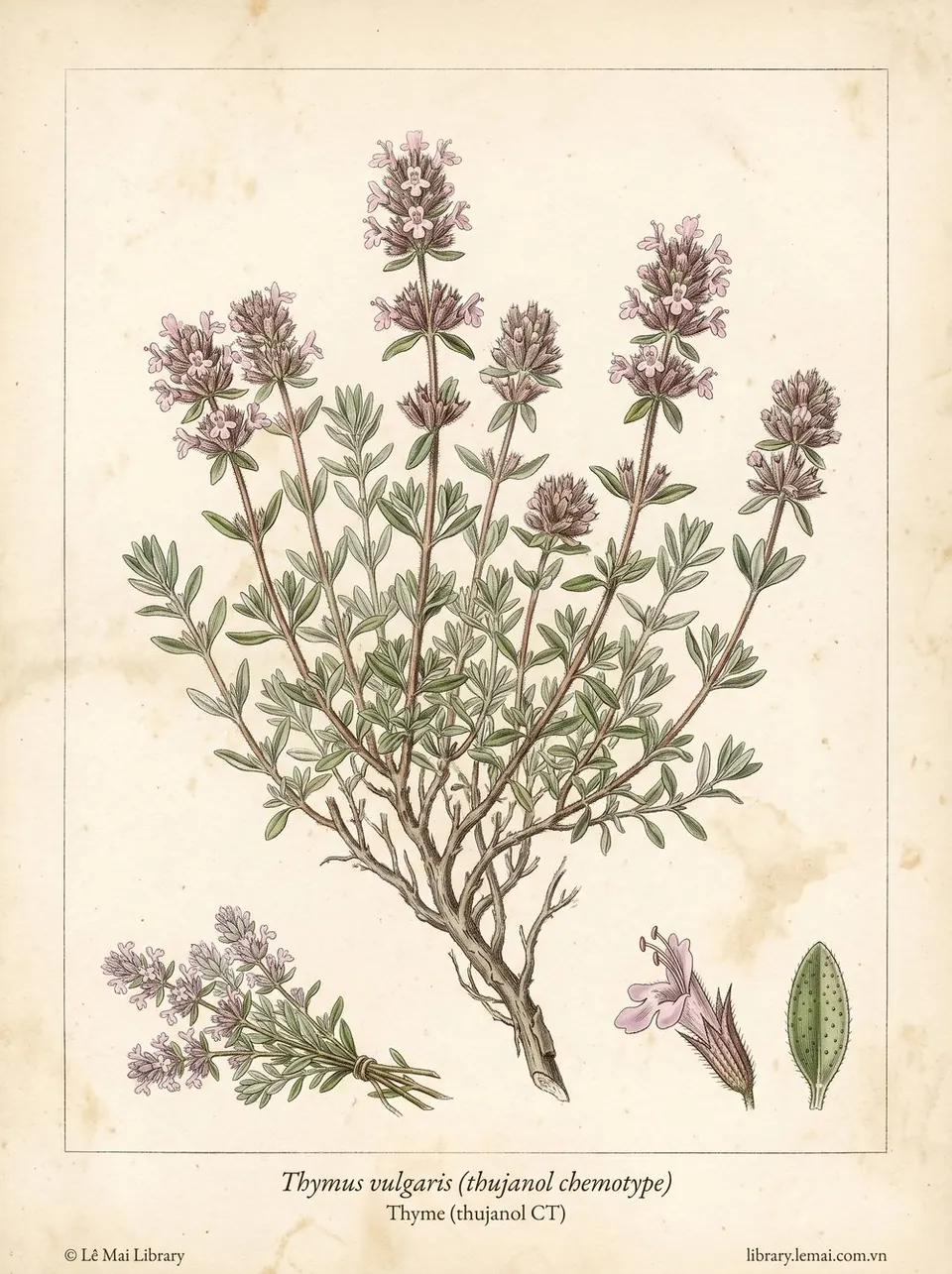
Thymus vulgaris (thujanol chemotype)
Thujanol chemotype thyme oil is steam-distilled from the aerial parts of Thymus vulgaris, a member of the mint family; this very rare type grows in high-altitude Provence. It smells soft and sweetly herbal; its main component is (E)-4-thujanol, with (Z)-4-thujanol and myrcenol. Despite the name, thujanol is not thujone; the skin sensitization risk is low and it is considered the softest chemotype.
Updated 4 Nov 2026 · Lê Mai Team
(E)-4-Thujanol dominant. Low skin sensitization risk.
Safer than thymol CT.
Does not cause neurotoxicity despite the name 'thujanol', different from thujone.
| (E)-4-Thujanol | 30.0 – 50.0 % |
| (Z)-4-Thujanol | 5.0 – 12.0 % |
| Myrcenol | 5.0 – 10.0 % |
| Linalool | 3.0 – 10.0 % |
| Terpinen-4-ol | 2.0 – 6.0 % |
Thujanol chemotype of Thymus vulgaris, very rare. Grows in high-altitude Provence.
Family Lamiaceae.
Niche specialty thyme. In aromatherapy considered the 'softest' chemotype.