サフラン
Nghệ tây
Crocus sativus
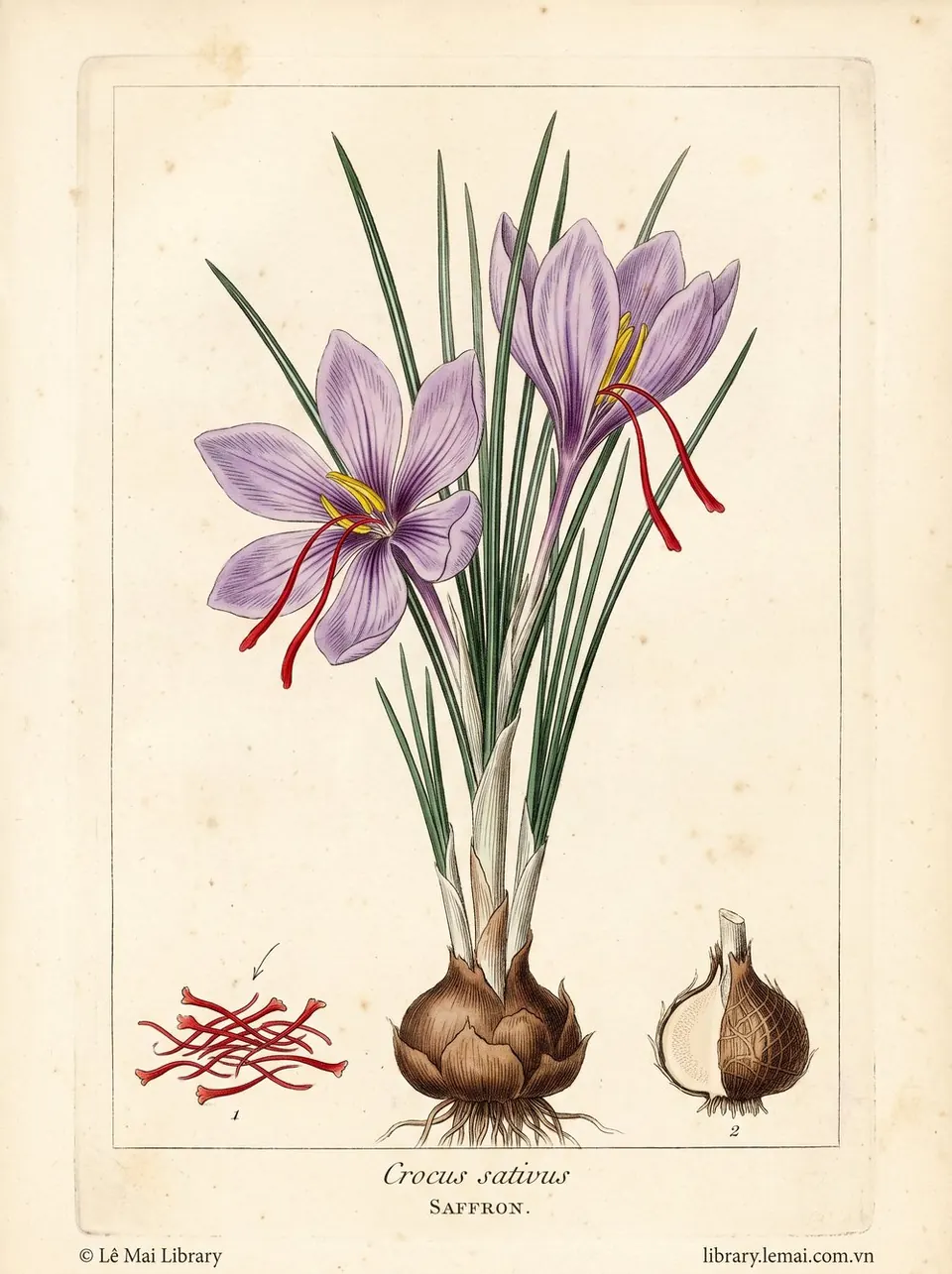
Saffron absolute is solvent-extracted from the stigmas of Crocus sativus, an iris-family plant traditionally grown in Iran, Greece and Morocco and by Spanish growers; each flower gives only 3 stigmas, picked by hand in the early morning. It smells warm, woody and honeyed with a faint tobacco note; its main component is safranal (about 60 to 70%). Safety data are limited because production is so small, so avoid it during pregnancy.
Updated 6 Nov 2026 · Lê Mai Team
Low skin sensitization risk anticipated.
Saffron oil lacks extensive toxicology data due to very limited production.
No pregnancy data, avoid use.
| Safranal | 60.0 – 70.0 % |
| 4-Ketoisophorone | 5.0 – 12.0 % |
| Isophorone | 2.0 – 5.0 % |
Crocus sativus is the saffron crocus, traditionally cultivated in Iran, Spain, Greece, and Morocco. The deep red stigmas inside the flower yield saffron, the world's most expensive spice.
Each flower yields 3 stigmas. About 150,000-200,000 flowers are needed for 1 kg of dried saffron. Hand-picked at dawn before the sun rises.
Saffron absolute is much rarer than saffron spice, most saffron goes to culinary use.
Family Iridaceae, same family as iris (orris).
| Dzing! | L'Artisan Parfumeur · 1999 · heart |
| Safran Troublant | L'Artisan Parfumeur · 2002 · main note |
| Ange ou Démon | Givenchy · 2006 · top |
| 8 88 | Comme des Garçons · 2007 · heart |
| Oud | Maison Francis Kurkdjian · 2012 · top |
Based on note lists published by each house. Fragrance names and marks belong to their owners.
Distinctive aroma: aromatic, warm, woody, honeyed, with a faint tobacco note. Difficult to perfectly replicate by synthesis.
In niche perfumery, saffron absolute is a refined 'oriental luxury' note.