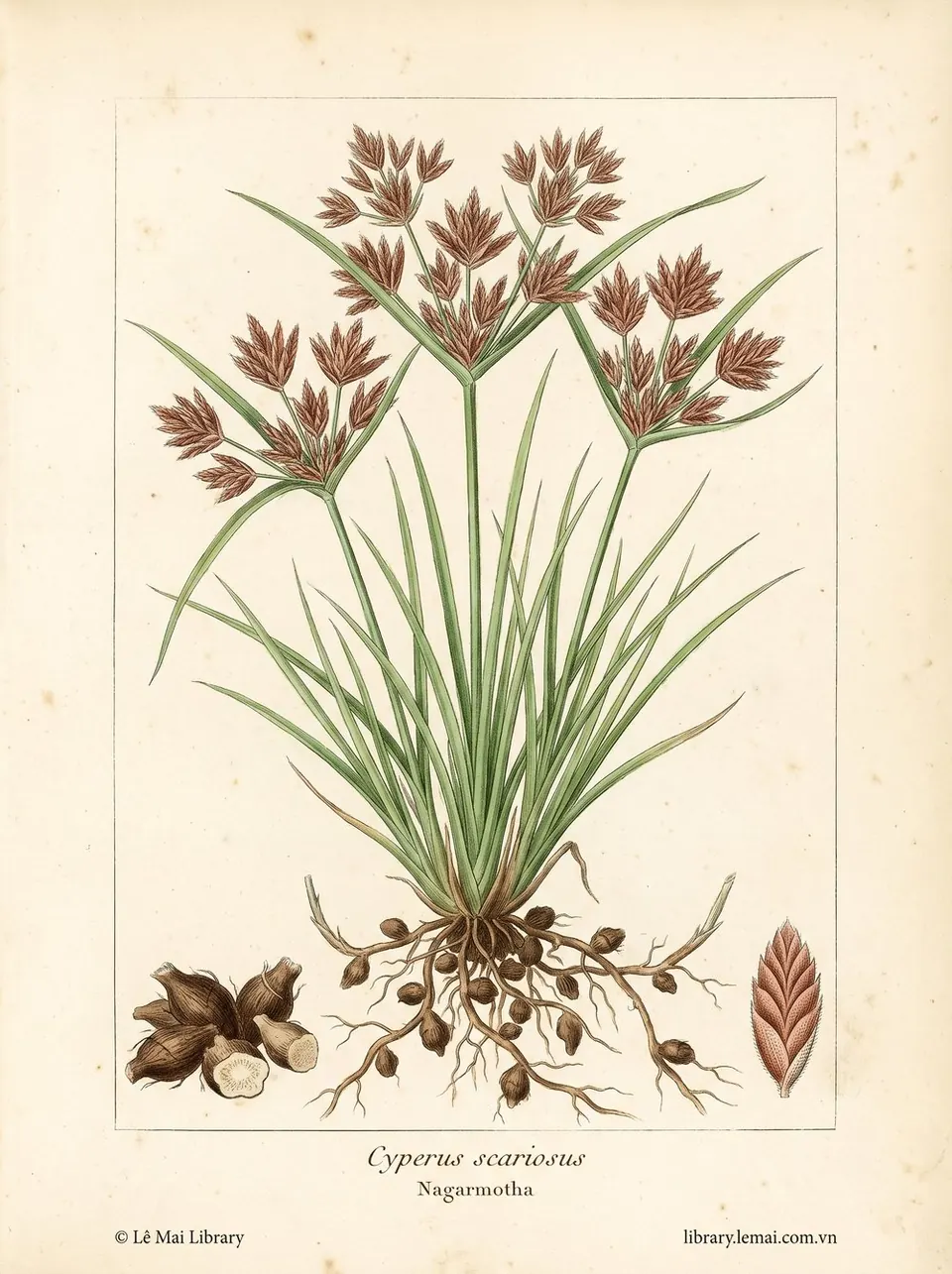
ナガモータ
Cỏ cú, Củ gấu
Cyperus scariosus
Cypriol
Nagarmotha, also called cypriol, is an essential oil steam-distilled from the dried rhizomes of Cyperus scariosus, a sedge that grows wild in India. It has a woody, earthy, lightly sweet scent that no other oil quite replaces; its main components are cyperene and α-cyperone. Safety data are limited, so keep skin concentrations low and avoid it during pregnancy and breastfeeding.
Updated 6 Nov 2026 · Lê Mai Team
Limited safety data. No specific toxicology studies on the oil.
Recommended at low dermal concentrations.
Not recommended in pregnancy and breastfeeding due to insufficient data.
| Cyperene | 25.0 – 35.0 % |
| α-Cyperone | 5.0 – 12.0 % |
| Rotundene | 4.0 – 10.0 % |
| Cyperol | 3.0 – 8.0 % |
| β-Cyperone | 2.0 – 6.0 % |
| Patchoulenone | 1.0 – 5.0 % |
Cyperus scariosus is a grass-like perennial growing wild in India. The rhizomes have a woody, earthy, lightly sweet aroma, distinctive for oriental perfumery.
The essential oil is distilled from dried rhizomes. Production is mainly in India.
Family Cyperaceae, same family as Cyperus rotundus (nut grass).
Also called 'cypriol' in perfumery. A unique woody-earthy-sweet aroma not replicated by any other oil.
In Ayurveda, nagarmotha root is called 'musta' or 'mustaka'. The essential oil is a secondary product.