Một dự án của Lê Mai A Lê Mai project · go to lemai.com.vn

Javanol

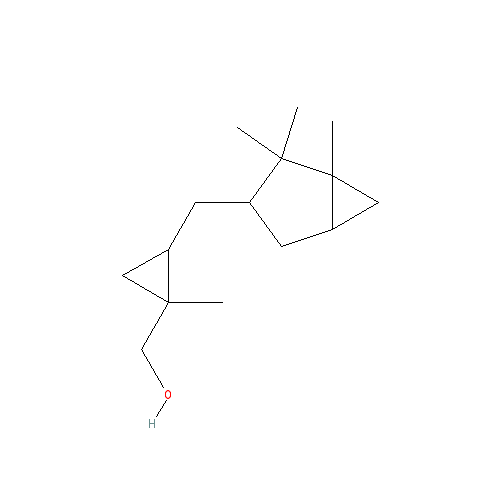
[1-Methyl-2-[(1,2,2-trimethylbicyclo[3.1.0]hexan-3-yl)methyl]cyclopropyl]methanol

Javanol

Cyclopropyl terpenoid alcohol · C₁₅H₂₆O

Chemical structure of Javanol
2D structure PubChem / NCI CIR

Chemical info

CAS number CAS
198404-98-7
Molecular formula
C₁₅H₂₆O
Molecular weight
222.37 g/mol
Introduced
late 1990s (US patent 5,707,961, filed 1996, granted 1998) · Givaudan
Origin
Synthetic
Odor family
Woody
Note
Base
Aroma
Creamy, milky sandalwood, very powerful, with a light rosy nuance and a moist wood feel.

History

Javanol is one of the most powerful synthetic sandalwood molecules, developed by Givaudan in the late 1990s. It has two cyclopropane rings, quite unlike the natural santalol skeleton, yet smells very close.

Synthetic sandalwoods such as Javanol emerged as Indian sandalwood (Santalum album) became increasingly scarce.


In perfumery

Javanol is used at very low levels to create a creamy sandalwood base, often combined with other synthetic sandalwoods for a complete profile.


Connections

Evokessandalwood

Regulatory status

Unrestricted · No IFRA standard
IFRA 51
No dedicated IFRA Standard in the 51st Amendment index.
EU allergen 2023/1545
Not named individually in the expanded allergen list of Regulation 2023/1545.

Sources

  1. Wikidata Q81984839 (CAS 198404-98-7, formula; data mirrored from PubChem)
  2. Kraft P., Bajgrowicz J.A., Denis C., Fráter G. Odds and trends: recent developments in the chemistry of odorants. Angew. Chem. Int. Ed. 39 (2000) 2980–3010
  3. The Good Scents Company Information System, material entries
  4. IFRA Standards, 51st Amendment: Index of IFRA Standards (notified 30 June 2023)
  5. US Patent 5,707,961 (Givaudan-Roure), filed 1996, granted 1998