Một dự án của Lê Mai A Lê Mai project · go to lemai.com.vn

Hydroxycitronellal

7-HYDROXY-3,7-DIMETHYLOCTANAL

7-Hydroxycitronellal, Laurine

Hydroxy terpenoid aldehyde · C₁₀H₂₀O₂

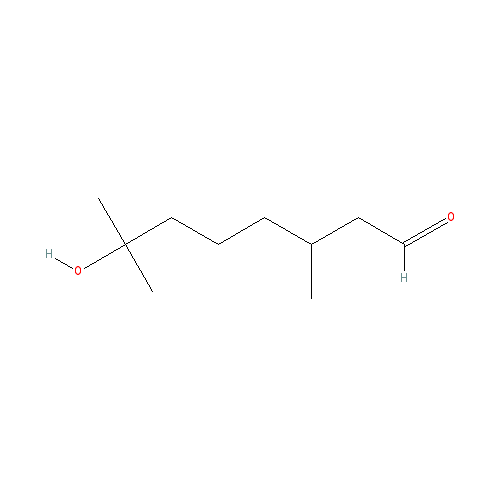
Chemical structure of Hydroxycitronellal
2D structure PubChem / NCI CIR

Chemical info

CAS number CAS
107-75-5
Molecular formula
C₁₀H₂₀O₂
Molecular weight
172.27 g/mol
Origin
Synthetic
Odor family
Floral
Note
Heart
Aroma
Lily of the valley and linden blossom, soft and sweet, slightly green.

History

Hydroxycitronellal is made from citronellal by hydration. It is one of the oldest synthetic muguet materials and the precursor of the Schiff base Aurantiol.


In perfumery

The backbone of classic lily of the valley and white floral accords. Limited to 1% in the EU and subject to labelling.


Connections

EvokesLily of the valley, Linden blossom
Found in natureCitronellal (precursor)

Regulatory status

EU max 1% · Allergen
IFRA 51
Restricted by an IFRA Standard (entry "Hydroxycitronellal"), current version issued at Amendment 51. Maximum levels differ across the 12 product categories.
EU CosReg
Annex III, entry 72: maximum 1.0% in the finished product (other than oral products).
EU allergen 2023/1545
One of the original 24 labelled fragrance allergens (Annex III, entry 72). Must be named on the label above 0.001% in leave-on and 0.01% in rinse-off products.

Sources

  1. NCI/CADD Chemical Identifier Resolver, CAS 107-75-5
  2. IFRA Standards Library, Amendments up to 51
  3. Regulation (EC) No 1223/2009, consolidated text of 18.05.2026, Annexes II and III
  4. Commission Regulation (EU) 2017/1410 (HICC, atranol, chloroatranol; hydroxycitronellal limit)