Ethyl acetate
Ethyl ethanoate
Acetoxyethane · Acetic acid ethyl ester · Acetic ether
化学組成 · Constituent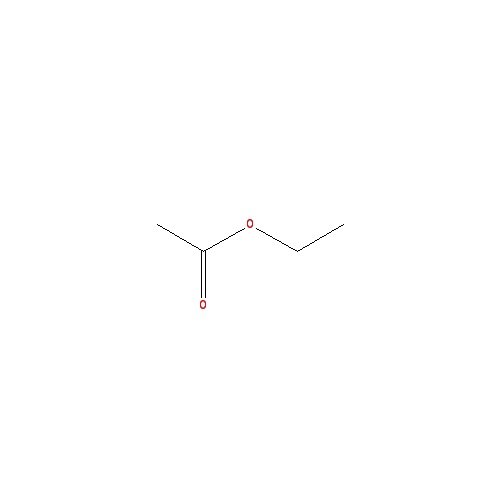
Ethyl ethanoate
Acetoxyethane · Acetic acid ethyl ester · Acetic ether
化学組成 · Constituent
Ethyl acetate is a common organic solvent that occurs at very low levels in a few essential oils. The main concern is inhalation of high-concentration vapors.
Skin. A 10 percent patch test on human subjects produced neither irritation nor sensitization.
Oral and inhalation. Acute oral LD50 in rats is 5.6 g/kg. Acute inhalation LC50 in rats is 1,600 ppm after 8 hours.
Neurology. A 13-week inhalation exposure at 350, 750 or 1,500 ppm in rats showed neurotoxic signs at the two higher doses, reversible upon cessation. The neurotoxic LOEL is 1,500 ppm.
Mutagenicity. Not genotoxic in mouse micronucleus tests.
| Mustard | 3.8 % |
Ethyl acetate is hydrolyzed to ethanol, then partly excreted unchanged in expired air and urine, with the rest metabolized further.
Ethyl acetate is produced industrially in large volumes as a solvent for paints, inks and coffee decaffeination. In essential oils it occurs only in trace amounts.