3-Butylidene phthalide
1,3-Dihydro-3-butylidenebenzo[c]furan-1-one
化学組成 · Constituent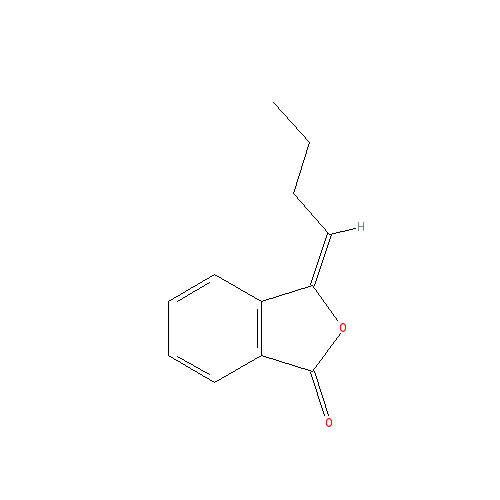
1,3-Dihydro-3-butylidenebenzo[c]furan-1-one
化学組成 · Constituent
3-Butylidene phthalide exists as (E) and (Z) isomers, with (Z) more abundant in Himalayan Angelica root oil.
Skin. A 2 percent patch test on 25 volunteers showed no irritation or sensitization. Undiluted application to rabbits caused mild irritation.
Oral. Acute oral LD50 in rats is 1.85–2.42 g/kg; rabbit dermal LD50 exceeds 5 g/kg.
Cancer. The compound shows dose-dependent cytotoxicity against the human HT-29 colorectal cancer cell line.
| Angelica root (Himalayan) | 11.3 – 20.5 % |
| Celery seed | 2.3 – 8.0 % |
| Lovage root | 1.5 % |
(Z)-3-Butylidene phthalide is a characteristic marker for Angelica glauca. The compound contributes to the strong, pungent character of Himalayan Angelica root.