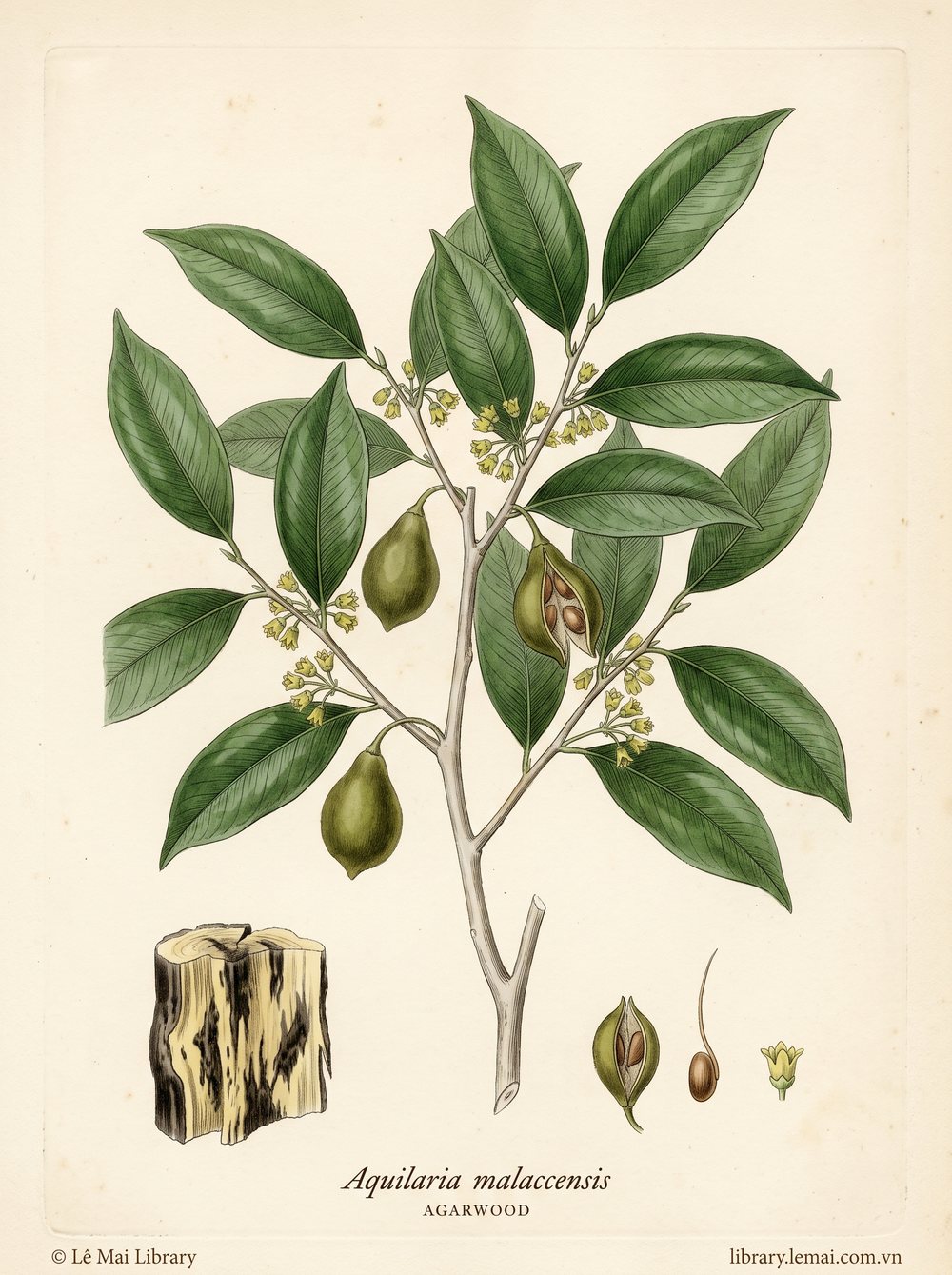
沈香
Trầm hương
Aquilaria malaccensis
Agar, Aloeswood, Eaglewood, Oud
No known hazards have been reported for agarwood oil.
Agarwood oil vapors are sedative to mice in laboratory studies.
Contains no known carcinogens.
| 2-(2-(4-Methoxyphenyl)ethyl) chromone | 21.2 – 33.0 % |
| 2-(2-Phenylethyl) chromone | 16.1 – 23.6 % |
| Oxo-agarospirol | 1.4 – 5.3 % |
| Guaia-1(10),11-dien-15-oic acid | < 4.7 % |
| 6-Methoxy-2-(2-(4-methoxyphenyl)ethyl) chromone | 2.0 – 3.7 % |
| Guaia-1(10),11-dien-15-al | 0.4 – 3.4 % |
| Selina-3,11-dien-9-ol | 0.4 – 2.8 % |
Agarwood comes from fungus-infected wood of Aquilaria malaccensis. Uninfected trees produce pale wood with no characteristic aroma.
Oil is produced mainly in Vietnam, Laos, Cambodia, Bangladesh, India. Also extracted from Aquilaria sinensis.
Aquilaria malaccensis is listed under CITES Appendix II — species requiring strict trade control to prevent extinction.
Agarwood is one of the most expensive aromatic raw materials — ten to fifteen times the cost of jasmine absolute.
CO₂ extracts are also produced, with a different scent profile from steam-distilled oil.