Một dự án của Lê Mai A Lê Mai project · go to lemai.com.vn

Skatole

3-Methyl-1H-indole

Skatole, 3-Methylindole, Scatole

Indole (heterocyclic amine) · C₉H₉N

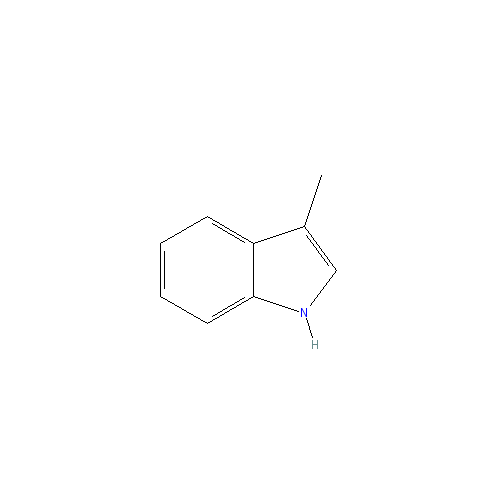
Chemical structure of Skatole
2D structure PubChem / NCI CIR

Chemical info

CAS number CAS
83-34-1
Molecular formula
C₉H₉N
Molecular weight
131.18 g/mol
Introduced
1877 (described) · Ludwig Brieger
Origin
Nature-identical
Odor family
Animalic
Note
Heart
Aroma
Heavy faecal odor when concentrated; at high dilution it turns warm, faintly floral and slightly camphoraceous.

History

Skatole is indole with an added methyl group, formed when gut bacteria break down tryptophan. The German physician Ludwig Brieger described it in 1877. The name comes from the Greek skatos, meaning dung. It occurs in trace amounts in some animal secretions used in classical perfumery.


In perfumery

Skatole is used in traces in civet, leather and white floral accords for an animal liveliness. Doses must be very low because the odor soon becomes unpleasant.


Connections

Evokescivet

Regulatory status

Unrestricted · No IFRA standard
IFRA 51
No dedicated IFRA Standard in the 51st Amendment index.
EU allergen 2023/1545
Not named individually in the expanded allergen list of Regulation 2023/1545.

Sources

  1. NCI/CADD Chemical Identifier Resolver, CAS 83-34-1 (formula, names)
  2. Sell C.S. (ed.) The Chemistry of Fragrances: From Perfumer to Consumer, 2nd ed., Royal Society of Chemistry 2006
  3. The Good Scents Company Information System, material entries
  4. IFRA Standards, 51st Amendment: Index of IFRA Standards (notified 30 June 2023)
  5. Skatole: discovery by Ludwig Brieger, 1877