Carvone
2-Methyl-5-(1-methylethenyl)-2-cyclohexene-1-one
p-Mentha-6,8-dien-2-one
化学組成 · Constituent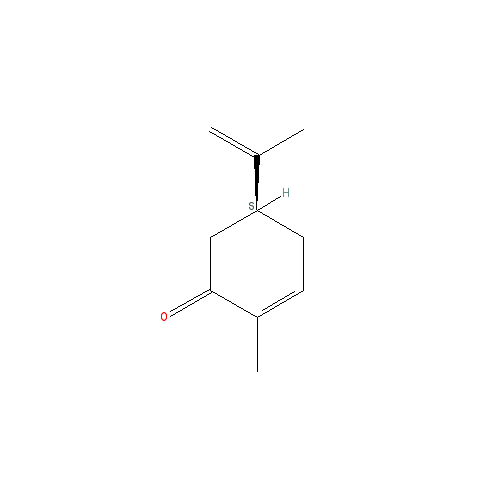
2-Methyl-5-(1-methylethenyl)-2-cyclohexene-1-one
p-Mentha-6,8-dien-2-one
化学組成 · Constituent
Carvone exists in two optical isomers. (+)-Carvone gives the caraway note; (-)-carvone gives the spearmint note. The two isomers have similar toxicity profiles but (-)-carvone is more skin-reactive.
Skin. Undiluted on rabbit skin caused 24-hour erythema. A 2 percent patch test on humans gave no irritation or sensitization. At 5 percent on 541 dermatitis patients, 15 reacted (2.8 percent) to (-)-carvone. (-)-Carvone is one of the sensitizing oxidation products of limonene.
Clinical case: a 58-year-old woman with chronic erosive cheilitis caused by (-)-carvone in toothpaste; resolved on switching products.
Oral. Acute oral LD50 for unspecified carvone is 1,640 mg/kg in rats and 766 mg/kg in guinea pigs. (+)-Carvone has rat oral LD50 of 3,710 mg/kg.
Subchronic. Rats fed 1 percent (about 500 mg/kg/day) for 14 days showed elevated serum cholesterol and triglycerides, reduced weight gain and feed intake. At 10,000 ppm for 16 weeks, growth retardation and testicular atrophy occurred. The 13-week (+)-carvone NOAEL in rats is 93 mg/kg; at 750–1,500 mg/kg most rats died.
Reproductive. High doses cause testicular degeneration and reduced sperm in male rats.
| Spearmint | 57.2 – 71.6 % |
| Caraway | 47.3 – 59.5 % |
| Dill seed (European) | 27.3 – 53.3 % |
| Balsamite | 51.5 % |
| Verbena (white) | 43.3 – 46.1 % |
| Dill weed | 31.6 – 42.4 % |
| Dill seed (Indian) | 17.4 – 23.1 % |
Carvone is metabolized through oxidation and glucuronide conjugation in rabbits. (+)-Carvone is metabolized faster than (-)-carvone in rat and human hepatocytes. Dermally applied carvone is rapidly absorbed, with stereoselective metabolism.
Both (+)- and (-)-carvone prolong pentobarbital sleep in rats, likely through CYP modulation.
(-)-Carvone is a key constituent of mint toothpaste and chewing gum. Some sensitive individuals may develop chronic cheilitis with prolonged contact.
The two isomers having entirely different aromas from the same molecular structure is a classic illustration of stereochemistry in fragrance.