Benzyl acetate
Phenylmethyl ethanoate
Acetic acid benzyl ester · Acetic acid phenylmethyl ester
化学組成 · Constituent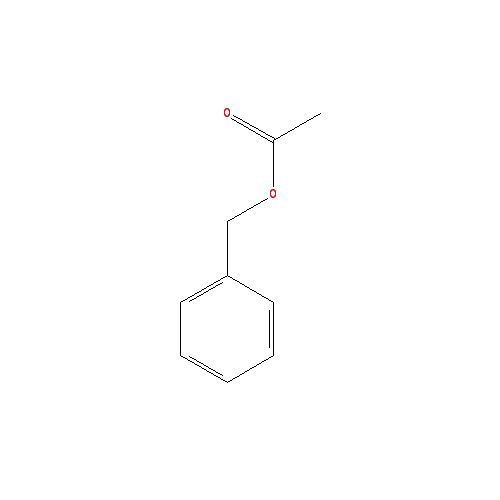
Phenylmethyl ethanoate
Acetic acid benzyl ester · Acetic acid phenylmethyl ester
化学組成 · Constituent
Benzyl acetate is a major constituent of many floral absolutes, notably jasmine. The compound is safe at practical use levels, although its vapor can irritate mucous membranes.
Skin. An 8 percent patch test on 25 volunteers caused no sensitization. On 100 dermatitis patients, 5 percent benzyl acetate produced no irritant or allergic reactions. The compound is non-phototoxic in vitro.
Mucous membranes and respiratory tract. Vapor can irritate mucous membranes, eyes and respiratory passages.
Oral. Acute oral LD50 is 2.49–3.69 g/kg in rats, 2.64 g/kg in rabbits. May cause vomiting and diarrhea if ingested.
Subchronic. Rats fed 860–2,150 mg/kg/day for 28 days lost weight, with increased mortality and neuronal necrosis in cerebellum, hippocampus and pyriform cortex. Glycine attenuated toxicity, suggesting glycine depletion as a mechanism.
Reproductive. Developmental NOAEL in rats is 500 mg/kg/day on gestation days 6–15. The high dose of 1,000 mg/kg/day increased skeletal malformations without maternal toxicity.
Mutagenicity. Non-mutagenic in the Ames test, but active in some mouse lymphoma assays.
| Jasmine | 15.0 – 24.5 % |
| Ylang-ylang | 0.4 – 12.4 % |
| Narcissus | 9.5 – 9.6 % |
| Hyacinth | 8.1 % |
| Jasmine sambac | 4.3 % |
| Champaca (orange) | 0.1 – 4.0 % |
| Jonquil | 1.0 % |
Benzyl acetate is rapidly and almost completely metabolized through benzyl alcohol to benzoic acid in humans, excreted as hippuric acid. After dermal application in rats, virtually all the absorbed dose is excreted within 24 hours.
Gavage produces benzoic acid plasma concentrations many times higher than equivalent feed administration, as gavage saturates the benzoic acid elimination pathway.
Benzyl acetate is the key carrier of the jasmine note in commercial perfumery and cosmetics. Synthetically it is produced from benzyl alcohol and acetic acid.