Ascaridole
1-Methyl-4-(1-methylethyl)-2,3-dioxabicyclo[2.2.2]oct-5-ene
Ascarisin
化学組成 · Constituent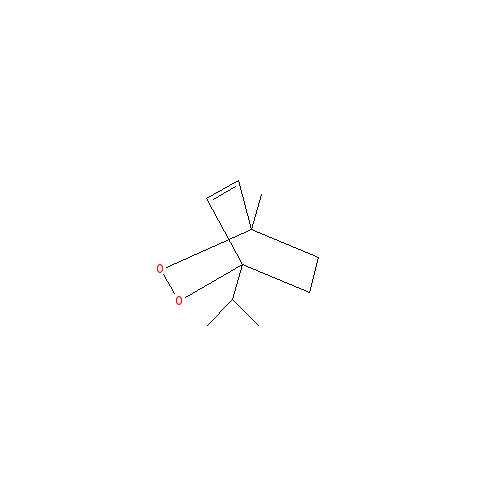
1-Methyl-4-(1-methylethyl)-2,3-dioxabicyclo[2.2.2]oct-5-ene
Ascarisin
化学組成 · Constituent
Ascaridole is an unstable organic peroxide. The compound is prone to explode when heated or mixed with organic acids. It is among the most toxic constituents in commercial essential oils, and is 10 to 20 times more toxic to humans than to rodents.
Skin. In patch testing on 602 cosmetic-sensitive patients at 1 percent, there was one irritant and nine allergic reactions. At 5 percent on 144 patients there were five irritant and 21 allergic reactions. In tea tree sensitized patients, 5 percent ascaridole reacted in 9 of 11.
Oral. Acute oral LD50 in rats is 200 mg/kg, in mice 400 mg/kg. A 100 mg/kg dose in mice causes hypothermia and reduced locomotion; 300 mg/kg is fatal. Wormseed oil has an estimated human oral fatal dose of 10 to 40 mg/kg.
Skin permeation. Ascaridole increased permeation of 5-fluorouracil through human skin 83-fold, suggesting efficient skin permeation of ascaridole itself and the potential for dermal toxicity.
Recommended adult daily maximum is 0.05 mg/kg ascaridole, equivalent to a 0.12 percent dermal maximum.
| Wormseed | 41.2 – 80.0 % |
| Boldo | 21.25 % |
| Sanna | 1.9 % |
| Southernwood | 0.8 % |
Ascaridole shows in vitro cytotoxicity against two human leukemia cell lines, one human breast cancer line and their multidrug-resistant counterparts. The compound also inhibits connective tissue cancer in mice at 10 to 20 mg/kg with little damage to normal tissue.
Ascaridole can form in highly oxidized tea tree oil. The compound has been detected at 0.2 percent in fresh tea tree oil.
Wormseed oil was historically used as an anthelmintic but has been replaced because of its high human toxicity.