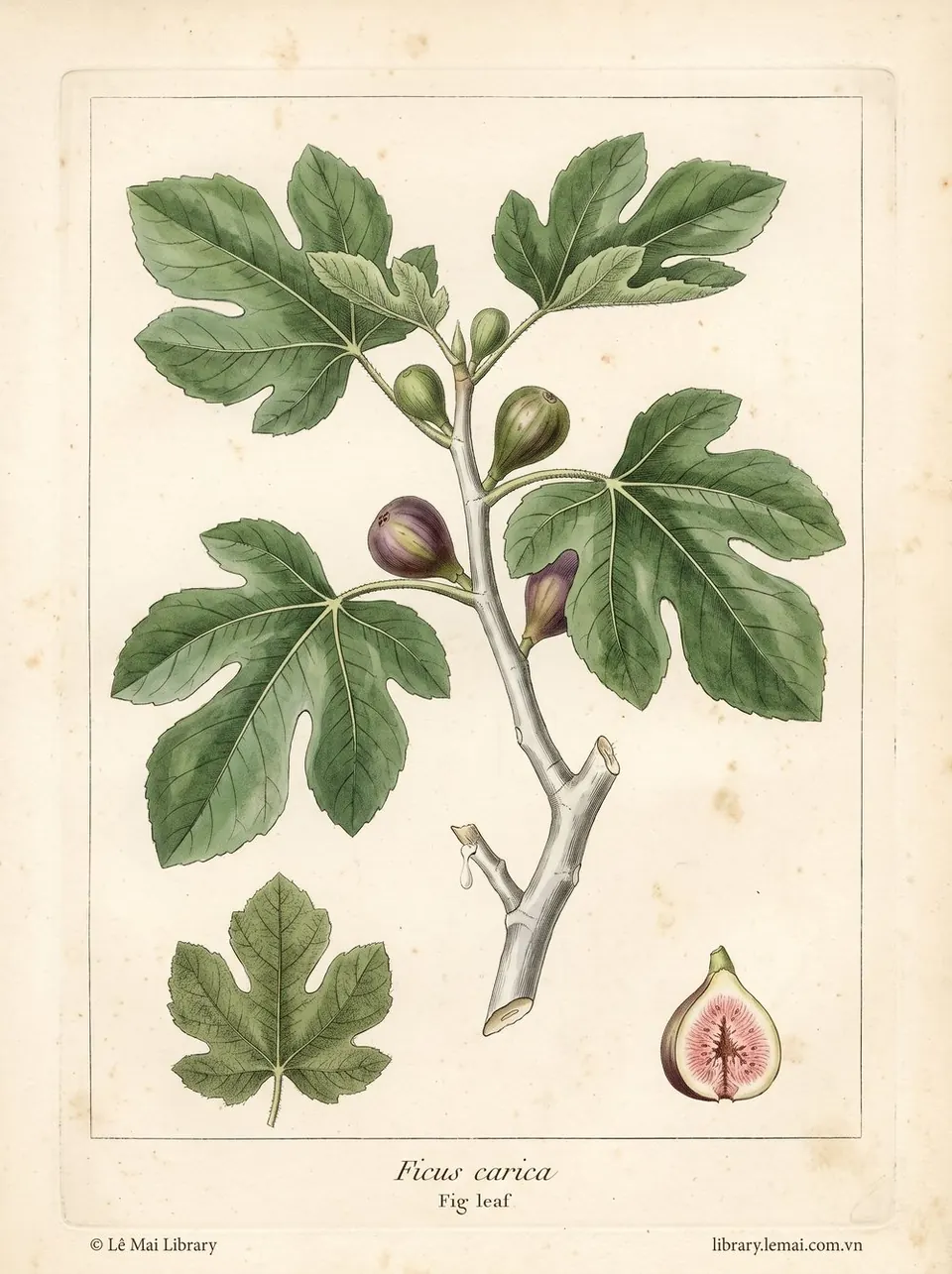
フィグリーフ
Lá sung
Ficus carica
Fig leaf absolute is solvent-extracted from the leaves of the fig tree, Ficus carica, a familiar Mediterranean member of the mulberry family. No useful composition data have been published. The risk of sensitization and phototoxicity is very high: IFRA recommends against using it in fragrance, it is banned in the EU and Canada, and it should not go into skin products.
Updated 6 Nov 2026 · Lê Mai Team
High risk of skin sensitization. High risk of phototoxicity.
Contraindication: should not be used, either internally or externally.
IFRA recommends fig leaf absolute not be used as a fragrance ingredient due to extreme sensitization and phototoxic potential. Prohibited in the EU and Canada.
Phototoxic in mice at 0.001 percent dilution, extremely low. Fig leaves contain furocoumarins; their presence in the absolute has not been established but the phototoxic profile suggests they are present.
| Composition data | No useful data published |
Ficus carica is the familiar Mediterranean fig tree. Fresh fig leaves exude a milky latex that can cause severe skin irritation and phototoxic reactions on sun exposure.
The absolute is solvent-extracted from the leaves. Produced for the fragrance industry, not used in aromatherapy or topical products.
Family Moraceae. Same family as mulberry, breadfruit.
| Premier Figuier | L'Artisan Parfumeur · 1994 · main note |
| Philosykos | Diptyque · 1996 · main note |
| Figue Amère | Miller Harris · 2002 · main note |
| Aqua Allegoria Nerolia Vetiver | top |
| Rosa Gardenia | heart |
Based on note lists published by each house. Fragrance names and marks belong to their owners.
Fig leaf absolute is typical of materials produced for the industrial fragrance trade, not suitable for aromatherapy.
Gardeners exposed to fresh fig leaves in sunlight can develop severe phytodermatitis, a well-documented natural hazard.