(E)-Anethole
(E)-4-Methoxy-(1-propenyl)benzene
trans-Anethole · p-trans-Propenylanisole · Anise camphor
化学組成 · Constituent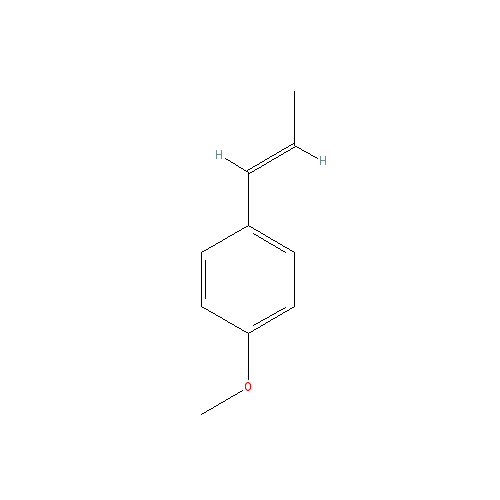
(E)-4-Methoxy-(1-propenyl)benzene
trans-Anethole · p-trans-Propenylanisole · Anise camphor
化学組成 · Constituent
(E)-Anethole là cấu tử chủ đạo trong tinh dầu hồi và thì là ngọt, với hàm lượng đến trên 90 phần trăm. An toàn dùng ngoài da ở nồng độ thông thường, nhưng có hoạt tính estrogen yếu nên cần thận trọng trong thai kỳ và một số tình trạng nội tiết.
Trên da. Patch test ở 2 phần trăm trên người không kích ứng và không mẫn cảm. Ở bệnh nhân nhạy cảm với tinh dầu hồi sao, 5 trong 15 người có phản ứng dương tính với chính (E)-anethole. Sản phẩm để lâu ngoài không khí oxi hoá thành (Z)-anethole, anisaldehyde, anisic ketone, có thể tăng tính gây mẫn cảm.
Đường uống. LD50 cấp tính 2.09 đến 3.20 g/kg trên chuột. Cho chuột ăn 10.000 ppm trong 15 tuần gây thay đổi nhẹ tế bào gan ở chuột đực. Ở 2.500 ppm trong một năm không có tác dụng phụ.
Sinh sản. (E)-Anethole có hoạt tính giống estrogen in vitro, yếu hơn nhiều lần so với estrogen nội sinh. Tinh dầu chứa nhiều anethole nên tránh dùng trong thai kỳ, cho con bú, lạc nội mạc tử cung, và ung thư phụ thuộc estrogen.
Gan. Liều cao gây thay đổi gan nhẹ ở chuột cái, chủ yếu do chất chuyển hoá anethole 1',2'-epoxide. Liều thấp được giải độc hiệu quả qua O-demethylation và omega-oxidation.
Đột biến gen và ung thư. Kết quả trong Ames test không nhất quán, mức genotoxic thấp. Không có bằng chứng gây ung thư đáng kể trong các thí nghiệm dài hạn trên chuột và chuột nhắt.
(E)-Anethole is the dominant constituent in anise and sweet fennel oils, often above 90 percent. It is safe for topical use at standard concentrations, but its weak estrogen-like activity calls for caution during pregnancy and certain endocrine conditions.
Skin. A 2 percent patch test on human subjects showed no irritation or sensitization. Among patients sensitive to star anise oil, 5 of 15 reacted positively to (E)-anethole itself. Aged or air-exposed material oxidizes to (Z)-anethole, anisaldehyde and anisic ketone, which may raise sensitization risk.
Oral. Acute oral LD50 is 2.09 to 3.20 g/kg in rats. Rats fed 10,000 ppm for 15 weeks showed mild hepatocyte changes in males only. At 2,500 ppm for one year, no adverse effects were observed.
Reproductive. (E)-Anethole shows estrogen-like activity in vitro, many times weaker than endogenous estrogens. Oils high in anethole should be avoided in pregnancy, breastfeeding, endometriosis and estrogen-dependent cancers.
Liver. High doses cause mild hepatic changes in female rats, mainly via the metabolite anethole 1',2'-epoxide. Low doses are efficiently detoxified through O-demethylation and omega-oxidation.
Mutagenicity and carcinogenicity. Ames test results are inconsistent; genotoxic potential is low. No significant carcinogenicity in long-term rat or mouse studies.
| Hồi · Anise | 75.2 – 96.1 % |
| Sim hồi · Myrtle (aniseed) | 95.0 % |
| Thì là ngọt · Fennel (sweet) | 58.1 – 92.5 % |
| Hoa hồi · Anise (star) | 71.2 – 91.8 % |
| Thì là đắng · Fennel (bitter) | 52.5 – 84.3 % |
| Trầu (lá) · Betel | 0 – 7.8 % |
| Damiana | 1.0 % |
(E)-Anethole được phân phối và chuyển hoá tương tự ở chuột, thỏ và người. Phần lớn liều uống được bài tiết trong vòng 48 giờ qua nước tiểu. Sau khi tiêm tĩnh mạch, hợp chất tích tụ chủ yếu ở gan, phổi và não.
Ba con đường chuyển hoá chính. O-demethylation tạo ra para-hydroxyl propenylbenzene. N-oxidation. Epoxidation tạo ra anethole 1',2'-epoxide, một chất trung gian phản ứng và là con đường thiểu số ở người, khoảng 3 phần trăm tổng dòng chuyển hoá.
Ở liều thấp, epoxidation là con đường phụ. Ở liều cao trong chuột cái, dòng chuyển hoá dịch chuyển sang epoxidation, sinh ra nhiều epoxide hơn và giải thích độc tính gan cao hơn ở giới tính này.
(E)-Anethole is distributed and metabolized similarly in rats, rabbits and humans. Most of an oral dose is excreted within 48 hours through urine. After intravenous dosing, the compound accumulates mainly in liver, lungs and brain.
Three principal metabolic pathways. O-demethylation yields para-hydroxyl propenylbenzene. N-oxidation. Epoxidation produces anethole 1',2'-epoxide, a reactive intermediate; in humans this is a minor pathway at around 3 percent of total flux.
At low doses, epoxidation is minor. At high doses in female rats the metabolic flux shifts toward epoxidation, producing more epoxide and explaining the higher hepatotoxicity observed in this sex.
(E)-Anethole có cấu trúc gần với estragole và safrole, hai hợp chất có rủi ro ung thư cao hơn. Tuy nhiên hồ sơ chuyển hoá của (E)-anethole khác biệt và an toàn hơn nhiều.
Hợp chất cũng ức chế kết tập tiểu cầu, vì vậy tinh dầu hồi đường uống cần thận trọng khi dùng cùng thuốc chống đông, trước phẫu thuật lớn, sinh đẻ, loét tiêu hoá hoặc các rối loạn chảy máu khác.
(E)-Anethole is structurally close to estragole and safrole, two compounds with higher carcinogenic risk. Its metabolic profile, however, is markedly different and substantially safer.
The compound also inhibits platelet aggregation, so oral use of anise oils warrants caution alongside anticoagulant therapy, before major surgery, childbirth, peptic ulcer or other bleeding disorders.