Menthol
[1R-(1α,2β,5β)]-5-Methyl-2-(1-methylethyl)cyclohexanol
(-)-p-Menthan-3-ol · (-)-3-Hydroxy-p-menthane · Levomenthol · Peppermint camphor
化学組成 · Constituent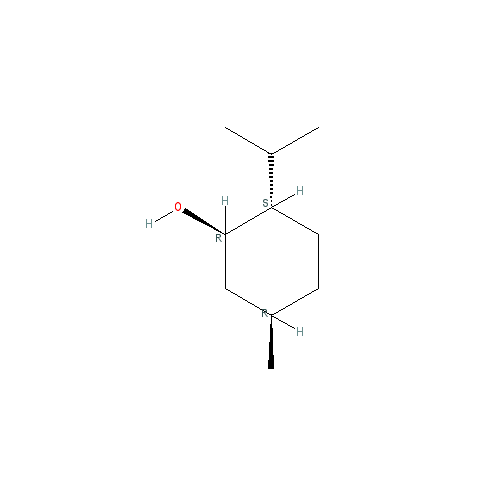
[1R-(1α,2β,5β)]-5-Methyl-2-(1-methylethyl)cyclohexanol
(-)-p-Menthan-3-ol · (-)-3-Hydroxy-p-menthane · Levomenthol · Peppermint camphor
化学組成 · Constituent
Menthol is the central constituent of peppermint oil, interacting with TRPM8 channels on sensory neurons to produce a cold sensation. Safe at standard use levels but with specific contraindications.
Skin. Undiluted menthol was non-irritating to rabbit skin. An 8 percent test on volunteers produced no irritation and no sensitization. Allergy cases have been reported but are rare given the widespread use of menthol in chewing gum, toothpaste and medicines.
Infants. Nasal instillation of menthol-containing solutions is hazardous in young children. Severe poisoning and coma have been reported in children aged 1 month to 3 years 9 months. Inhalation of menthol vapors can cause transient apnea or reduced respiratory rate in premature newborns.
Oral. Acute oral LD50 in rats 3.3 g/kg, in cats 900 mg/kg. Rat 28-day NOAEL is 200 mg/kg/day. Prolonged high oral doses caused liver toxicity in rats, but humans on menthol-containing capsules for six months showed no hepatotoxicity.
G6PD deficiency. Menthol provoked severe neonatal jaundice in babies deficient in G6PD, since menthol is detoxified through a G6PD-linked pathway. Approximately 400 million people worldwide have this deficiency, primarily in Africa, Middle East, Southeast Asia and Brazil.
Reproductive and cancer. Not teratogenic in mice up to 185 mg/kg, rats 218 mg/kg, hamsters 405 mg/kg, rabbits 425 mg/kg. Not carcinogenic in two-year rat and mouse studies. Non-mutagenic in Ames tests.
Drug interactions. Two reports describe menthol potentiating the anticoagulant effect of warfarin. Menthol-rich oils may be avoided in cardiac fibrillation, and infants should not inhale menthol.
| Peppermint | 19.0 – 54.2 % |
| Cornmint | 28.8 – 34.7 % |
| Basil (lemon) | 3.8 – 4.4 % |
In humans, 50 to 79 percent of oral (-)-menthol is excreted in urine as menthol glucuronide, with no unchanged menthol detected. In rabbits at high doses, glucuronide conjugation drops to 20 to 48 percent.
After oral dosing at 800 mg/kg in rats, the major urinary metabolites were p-menthane-3,8-diol and 3,8-dihydroxy-p-menthane-7-carboxylic acid. Human systemic exposure from commercial menthol skin patches is relatively low.
Menthol is an agonist of TRPM8 calcium channels, present on sensory neurons and cells of blood vessels, respiratory tract, urinary system and prostate. TRPM8 channels are cold receptors but also regulate vascular tone among other biological effects.
Widely used in topical preparations for rheumatic conditions, in inhalation mixtures for nasal decongestion, and in chewing gum, toothpaste and confectionary.