Allyl isothiocyanate
3-Isothiocyanato-1-propene
Allyl isosulfocyanate
化学組成 · Constituent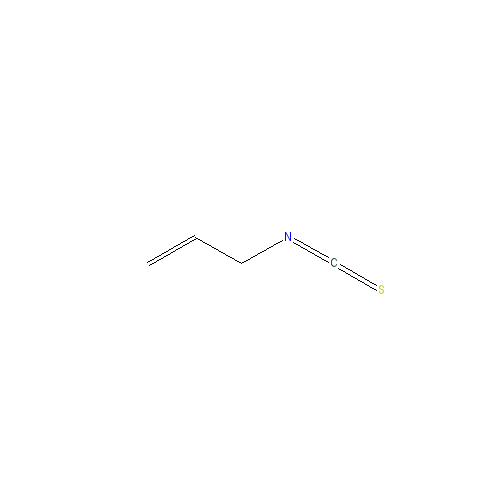
3-Isothiocyanato-1-propene
Allyl isosulfocyanate
化学組成 · Constituent
Allyl isothiocyanate is a severe irritant to mucous membranes and skin. IFRA and the European Union prohibit it entirely in fragrance and cosmetic products.
Skin. Only 2 of 259 dermatitis patients with suspected contact allergy from vegetables and food reacted positively when patch-tested with mustard. The compound's high irritancy disqualifies it from topical use.
Oral. Acute oral LD50 in rats ranges from 340 to 490 mg/kg, a moderate level. Rats fed 50 mg/kg for 20 days developed acute to subacute stomach ulceration in all animals. At 20 mg/kg, half developed ulceration.
Reproductive. Subcutaneous injection of 50 mg/kg for two consecutive days caused embryonic death and decreased fetal weight in pregnant rats.
Liver. Allyl isothiocyanate and its glutathione and N-acetylcysteine conjugates are considerably toxic to rat liver cells.
Carcinogenic. In a two-year study, male rats fed 12 or 25 mg/kg five times a week developed papillomas in the urinary bladder. Female rats showed equivocal evidence of subcutaneous fibrosarcomas.
| Horseradish | 44.3 – 55.7 % |
| Mustard | 23.2 – 68.8 % |
Allyl isothiocyanate is metabolized to mercapturic acids and conjugated with N-acetylcysteine. In rats and mice, over 80 percent of an oral dose is excreted in urine within 48 hours as N-acetyl-S-(N-allylthiocarbamoyl)-L-cysteine.
The active compound is also found in Brassicaceae vegetables such as cabbage and broccoli, at much lower concentrations than in mustard essential oil.
Allyl isothiocyanate is the compound that defines the pungency and aroma of mustard, horseradish and wasabi.
At low concentrations the compound is used as a food flavoring with a very small ADI limit.
An ECETOC group review classified allyl isothiocyanate as a moderate allergen, likely to elicit sensitization reactions at 1 percent or more in a product.