Alantolactone
[3aR-(3aα,5β,8aβ,9aα)]-3a,5,6,7,8,8a,9,9a-Octahydro-5,8a-dimethyl-3-methylene-naphtho[2,3-b]furan-2(3H)-one
Helenin · Elecampane camphor · Eupatal · 5,11(13)-Eudesmadien-12,8-olide
化学組成 · Constituent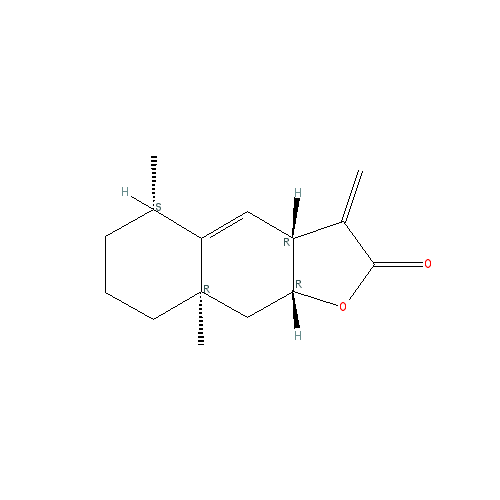
[3aR-(3aα,5β,8aβ,9aα)]-3a,5,6,7,8,8a,9,9a-Octahydro-5,8a-dimethyl-3-methylene-naphtho[2,3-b]furan-2(3H)-one
Helenin · Elecampane camphor · Eupatal · 5,11(13)-Eudesmadien-12,8-olide
化学組成 · Constituent
Alantolactone belongs to the sesquiterpene lactones from the Compositae family, a chemical group notorious for skin sensitization.
Hapten activity. The molecule binds with free amino acids and skin proteins, triggering contact allergy. In pre-sensitized guinea pigs and in human dermatitis patients, a 1 percent patch test gave positive reactions in 4 of 25 cases.
Toxicological classification. Based on a review of German-language literature, alantolactone was classified as Category A, a significant contact allergen.
Bioactivity. Alantolactone is cytotoxic in vitro against several human cancer cell lines. It also induces endogenous detoxifying enzymes including quinone reductase, glutathione reductase, glutathione S-transferase and heme oxygenase.
| Elecampane | 52.4 % |
The protein-binding tendency of alantolactone simultaneously explains three properties: skin sensitization, induction of detoxifying enzymes, and cytotoxicity against cancer cells.
Isoalantolactone, an isomer not separately profiled in the source literature, shows similar properties.