Benzyl cyanide
Benzeneacetonitrile
Phenylacetonitrile · α-Tolunitrile · o-Cyanotoluene
化学組成 · Constituent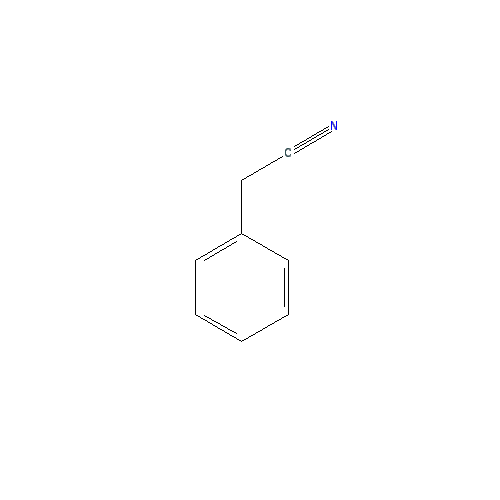
Benzeneacetonitrile
Phenylacetonitrile · α-Tolunitrile · o-Cyanotoluene
化学組成 · Constituent
Benzyl cyanide là nitrile hữu cơ, không ion hoá thành cyanide tự do trong dung dịch, nhưng giải phóng cyanide chậm qua chuyển hoá. Hợp chất bị IFRA, EU và Health Canada cấm hoặc hạn chế nghiêm ngặt làm hương liệu.
Trên da. Có báo cáo gây kích ứng, nhưng không có dữ liệu cụ thể hỗ trợ.
Độc tính cấp. LD50 cấp tính qua tiêm phúc mạc ở chuột là 75 mg/kg. LD50 qua đường uống là 211 mg/kg (chuột cái) và 304 mg/kg (chuột đực). Liều dưới mức gây chết gây độc thận, tăng bài tiết protein, amino axit và glucose.
Chuyển hoá. Bôi 150 mg/kg qua da chuột trong 24 giờ kín gây tăng đáng kể thiocyanate niệu, tương đương 32–37 phần trăm liều.
Hợp chất chỉ có mặt trong absolute hoa với nồng độ dưới 5 phần trăm, nên rủi ro thực tế bị giới hạn theo nồng độ trong sản phẩm cuối là 100 ppm (0.01 phần trăm).
Benzyl cyanide is an organic nitrile that does not ionize to free cyanide in solution but slowly releases cyanide during metabolism. The compound is prohibited or strictly restricted by IFRA, the EU and Health Canada in fragrance applications.
Skin. Reports of irritation exist but specific supporting data are lacking.
Acute toxicity. Acute intraperitoneal LD50 in rats is 75 mg/kg. Oral LD50 is 211 mg/kg (female rats) and 304 mg/kg (male rats). Sublethal doses are nephrotoxic, increasing excretion of protein, amino acids and glucose.
Metabolism. Dermal application of 150 mg/kg in rats under 24-hour occlusion markedly increased urinary thiocyanate, equivalent to 32–37 percent of the dose.
The compound appears in floral absolutes at below 5 percent, so practical risk is limited by the finished-product cap of 100 ppm (0.01 percent).
| Karo Karounde · Karo karoundé | 4.8 % |
| Sen cạn · Nasturtium | 2.0 % |
| Bạch đậu · Ginger lily | 1.3 % |
| Hoa cam · Orange flower | 1.0 % |
Benzyl cyanide được chuyển hoá ở gan chuột qua ít nhất hai isozyme CYP thành ion cyanide, sau đó bài tiết dưới dạng cyanide và thiocyanate. Hợp chất hít vào được giải độc tại khoang mũi.
Benzyl cyanide is metabolized in rat liver by at least two CYP isozymes to cyanide ions, then excreted as cyanide and thiocyanate. Inhaled benzyl cyanide is substantially detoxified in the nasal cavity.
Karo karoundé absolute có LD50 đường uống 1.4 g/kg ở chuột, gợi ý hàm lượng benzyl cyanide trong absolute không gây quan ngại độc tính cấp thực tế. Giới hạn IFRA được một số tác giả cho là quá hạn chế.
Karo karoundé absolute has an oral LD50 of 1.4 g/kg in rats, suggesting that benzyl cyanide content in the absolute does not raise practical acute toxicity concerns. Some authors view the IFRA limit as overly restrictive.