Alantolactone
[3aR-(3aα,5β,8aβ,9aα)]-3a,5,6,7,8,8a,9,9a-Octahydro-5,8a-dimethyl-3-methylene-naphtho[2,3-b]furan-2(3H)-one
Helenin · Elecampane camphor · Eupatal · 5,11(13)-Eudesmadien-12,8-olide
化学組成 · Constituent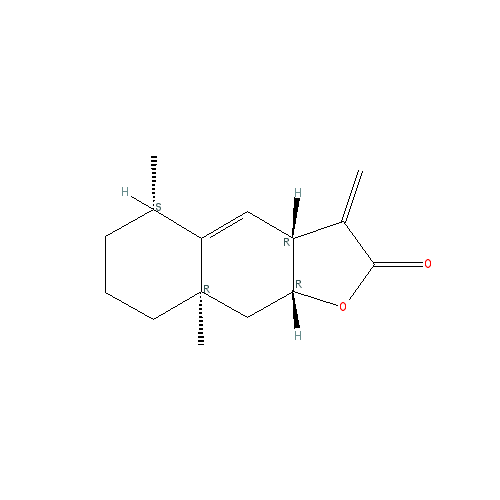
[3aR-(3aα,5β,8aβ,9aα)]-3a,5,6,7,8,8a,9,9a-Octahydro-5,8a-dimethyl-3-methylene-naphtho[2,3-b]furan-2(3H)-one
Helenin · Elecampane camphor · Eupatal · 5,11(13)-Eudesmadien-12,8-olide
化学組成 · Constituent
Alantolactone thuộc nhóm sesquiterpene lactone từ họ Cúc, vốn nổi tiếng là chất gây mẫn cảm da mạnh.
Hoạt tính hapten. Phân tử gắn kết với amino axit tự do và protein da, kích hoạt phản ứng dị ứng tiếp xúc. Ở chuột lang đã mẫn cảm trước, patch test với nồng độ 1 phần trăm cho phản ứng dương tính ở 4 trên 25 bệnh nhân viêm da.
Phân loại độc chất. Theo tổng hợp dữ liệu y văn tiếng Đức, alantolactone được xếp Loại A, nhóm chất gây dị ứng tiếp xúc đáng kể.
Hoạt tính sinh học. Alantolactone gây độc tế bào in vitro với nhiều dòng tế bào ung thư người. Đồng thời cảm ứng các enzyme giải độc nội sinh như quinone reductase, glutathione reductase, glutathione S-transferase và heme oxygenase.
Alantolactone belongs to the sesquiterpene lactones from the Compositae family, a chemical group notorious for skin sensitization.
Hapten activity. The molecule binds with free amino acids and skin proteins, triggering contact allergy. In pre-sensitized guinea pigs and in human dermatitis patients, a 1 percent patch test gave positive reactions in 4 of 25 cases.
Toxicological classification. Based on a review of German-language literature, alantolactone was classified as Category A, a significant contact allergen.
Bioactivity. Alantolactone is cytotoxic in vitro against several human cancer cell lines. It also induces endogenous detoxifying enzymes including quinone reductase, glutathione reductase, glutathione S-transferase and heme oxygenase.
| Cúc đảng sâm · Elecampane | 52.4 % |
Tính bám protein của alantolactone giải thích cùng lúc ba đặc tính: gây mẫn cảm da, cảm ứng enzyme giải độc, và gây độc tế bào ung thư.
Isoalantolactone, một đồng phân không được hồ sơ riêng trong tài liệu tham khảo, thể hiện đặc tính tương tự.
The protein-binding tendency of alantolactone simultaneously explains three properties: skin sensitization, induction of detoxifying enzymes, and cytotoxicity against cancer cells.
Isoalantolactone, an isomer not separately profiled in the source literature, shows similar properties.