Indole
Benzo[b]pyrrole
1H-Indole · 2,3-Benzopyrrole
化学組成 · Constituent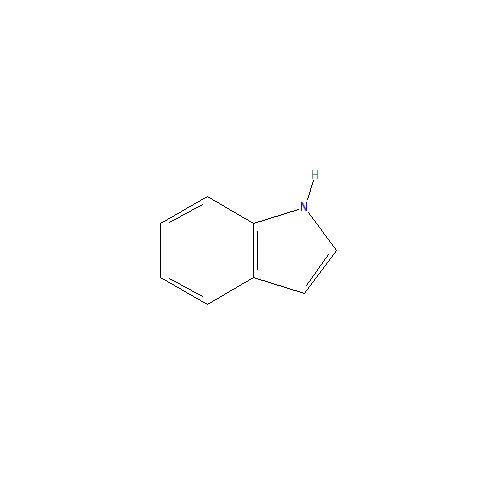
Benzo[b]pyrrole
1H-Indole · 2,3-Benzopyrrole
化学組成 · Constituent
Indole là một heterocyclic nitrogen có vai trò trung tâm trong mùi nhài và orange-blossom. Hợp chất có độc tính trung bình.
Trên da. Patch test ở 1 phần trăm trên 25 tình nguyện viên không gây mẫn cảm. Nguyên chất không gây kích ứng da thỏ.
Đường uống và da. LD50 cấp tính qua đường uống trên chuột 1 mL/kg. LD50 thấm qua da đơn lẻ ở thỏ 0.79 mL/kg. Mức 'trung bình' này không đáng kể với nồng độ rất thấp trong tinh dầu.
Đột biến gen. Không gây đột biến trong thử nghiệm Ames.
Indole is a heterocyclic nitrogen with a central role in the aroma of jasmine and orange-blossom. The compound has moderate toxicity.
Skin. A 1 percent patch test on 25 volunteers produced no sensitization. Undiluted material was not irritating to rabbit skin.
Oral and dermal. Acute oral LD50 in rats is 1 mL/kg. Single skin-penetration LD50 in rabbits is 0.79 mL/kg. This 'moderate' level is not concerning given the very low concentrations in essential oils.
Mutagenicity. Not mutagenic in the Ames test.
| Hoa lài Sambac · Jasmine sambac | 14.1 % |
| Ngọc lan vàng · Champaca (orange) | 2.9 – 12.0 % |
| Bạch đậu · Ginger lily | 7.0 % |
| Hoa nhài · Jasmine | 0.7 – 3.5 % |
| Kim ngân · Honeysuckle | 3.3 % |
| Thủy tiên vàng · Jonquil | 1.7 % |
| Hoa thủy tiên · Narcissus | 0 – 1.5 % |
| Hoa cam · Orange flower | 0.1 – 1.0 % |
Trên chuột, indole được chuyển hoá bằng hydroxyl hoá, đào thải một phần dưới dạng glucuronide nhưng chủ yếu là sulfate liên hợp. Sau uống, 80 phần trăm đào thải qua nước tiểu, 10 phần trăm qua phân và 2 phần trăm qua khí thở. Chất chuyển hoá chính trong nước tiểu là indoxyl sulfate.
In rats, indole is metabolized by hydroxylation and excreted partly as glucuronide but mainly as the sulfate conjugate. After oral dosing, 80 percent is excreted in urine, 10 percent in feces and 2 percent in expired air. The major urinary metabolite is indoxyl sulfate.
Indole là cấu tử đặc trưng cho 'phần tối' của các tinh dầu hoa trắng. Ở nồng độ cao mùi rất khó chịu, nhưng ở mức rất loãng nó là yếu tố không thể thiếu của hồ sơ mùi nhài và orange-blossom.
Indole is the constituent responsible for the 'dark side' of white-flower oils. At high concentration its odor is unpleasant, but at extreme dilution it becomes indispensable to the jasmine and orange-blossom profile.